
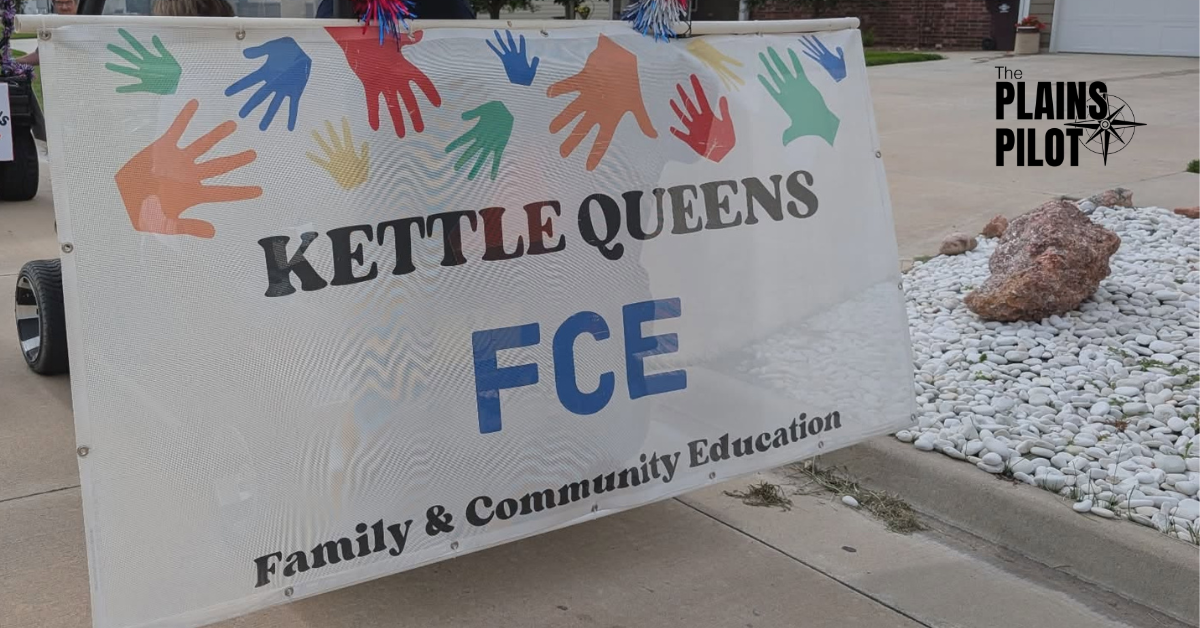
The Moundridge Kettle Queens FCE, a unit of the Kansas Association for Family and Community Education, had two meetings recently.
Learning about food labeling in August
Members met at 2 p.m. on Aug. 11 in the Moundridge Public Library.
Six members attended and spoke the FCE Creed.
Dorothy Otte had a short talk on “Heaven’s Grocery Store” and all the benefits we get from our faith.
Teresa Neufeld shared the lesson on “The Facts About Dates on Food Products.”
Date labels first began appearing following World War II.
According to the FDA, Americans are throwing away about one-third of our food at a cost of $156 billion each year.
Federal regulations require a “use by” date on the product label of infant formula.
Do not buy or use baby formula after its “use-by” date.
Signs of food spoilage include it smelling off, moldy, different texture than what it should be, and unpleasant taste.
If you can’t use a product, freeze it and use it later if it can be frozen.
Start sniffing what’s in your refrigerator before you chuck it.
Learning about pumpkins in September
Members also met Sept. 1 in the Moundridge Public Library.
Six ladies answered rollcall with their response to the following prompt: “Tell a way you can decorate with pumpkins.”
The FCE Creed was spoken.
On Oct. 13, the Southcentral Area Meeting will be held at the West Zion Mennonite Church starting at 9:30 a.m.
Wynona Becker told a story about a baby that had health problems from the book “God Winks for Mom” by Squire Rushnell and Louise DuArt.
Lory Fisher had the lesson on “Pumpkins? Yes, Please!”
Pumpkins are packed with vitamins, fiber, antioxidants and more.
They are full of nutrients and contain potassium, magnesium, folate, vitamins A and C, and zinc.
They have high levels of beta-carotene, which is a good cancer fighter and good for your heart.
Pumpkin seeds are an excellent source of magnesium and zinc.
Pumpkin seeds are rich in tryptophan, the amino acid that contributes to post-Thanksgiving dinner sleepiness.
Pumpkins are produced in all 50 states in the United States and contribute to the agricultural economy.
Illinois leads the nation in pumpkin production with more than 15,000 acres devoted to pumpkin production.
The Dickinson pumpkin variety, commonly used for pumpkin pie filling, does especially well in the fertile soil of Illinois.
Most of the canned pumpkin in the U.S. comes from that state where annual production is enough to make 90 million pumpkin pies.
The ladies each brought snacks, and the meeting was adjourned.
— Dorothy Otte, Kettle Queens