
Being an English teacher was the plan, but, after a stint with Teach for America as a science teacher in Baltimore, Jordan Leatherman decided to pursue a different career.
“It’s really hard to be a teacher in the American school system,” she said. “I just didn’t feel supported and wanted to go back to school to learn more about the science I was teaching.”
That’s just what she did, setting her sights on becoming a doctor.
“It was a pretty big life decision,” she said. “I was 25 years old, and I felt like I was too old. It’s funny to look back on.”
Achieving her goal wasn’t necessarily easy because she needed to take the required courses to get into medical school and embark on her new journey.
“I had to do all of my pre-reqs because my degree was in English, right?” she said. “So, I basically started over.”
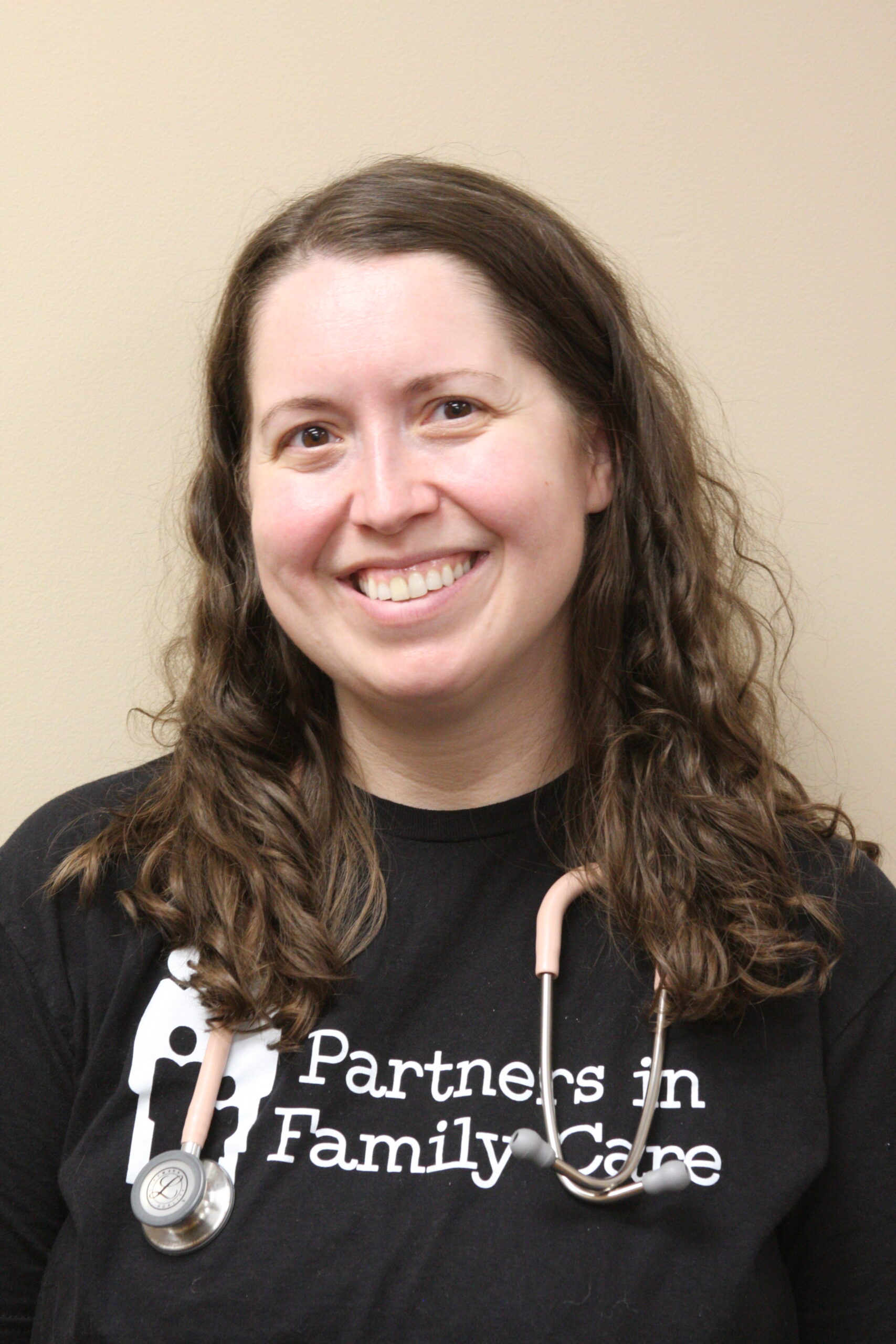
Now, at 37 years old, Leatherman has her Doctor of Medicine degree from the University of Kansas School of Medicine in Wichita, and she is the newest physician on the roster at Partners in Family Care, which has offices in Moundridge, Hesston, Inman and McPherson.
“I’m really happy to be here,” she said. “I’m feeling so welcomed.”
In August, Leatherman will mark her one-year anniversary with PIFC.
“It’s a second career, but the timing is perfect,” she said. “I couldn’t ask for a better chapter of life to be starting. I’m in a career that’s the right fit for me.”
Leatherman, originally from Mulvane, and her husband Justin now live in Hesston, and they have an infant son named Perry.
“My husband and I wanted to raise our family in a small town,” she said. “We’re making this community our home.”
Embedding herself in the local area, combined with her age, helps to make Leatherman a viable option for residents.
“They want someone who can stick with them for the long haul, so I’m going to be here,” she said. “Those long-term relationships in family medicine are one of my favorite aspects.”
Leatherman’s focus is on family medicine, meaning she can handle any patient.
“We call it from cradle to grave,” she said. “So, all the way through your life, no matter what stage you’re in, we have something to offer, and we can offer that locally without having to refer people out of town.”
Leatherman said she particularly enjoys pediatrics, women’s health including contraception and the associated procedures, and chronic care management such as diabetes and high blood pressure.
She said doesn’t handle pregnancy or delivery of babies, even though she received training to do so, and colonoscopies are handled by other PIFC doctors.
Though she will do anything to help her patients, Leatherman said there is a part of the human body she doesn’t look forward to treating.
“One thing I don’t really like is toenails,” she said. “But if my patient needs it, I’m going to do it.”
Kansas currently faces a rural healthcare crisis.
According to KU Medical Center, there is less than 1 doctor per 1,000 people in rural counties.
Because of this, based on reporting by Kansas City’s NPR affiliate KCUR, the Rural Health Transformation Program, which is a five-year program signed into law by President Donald Trump, is providing “federal grant money aimed at increasing healthcare access to rural residents” in the face of Medicaid cuts proposed by the Trump Administration.
Further complicating the landscape of rural health in Kansas is a report from the non-profit policy organization Centers for Healthcare Quality and Payment Reform, which found that out of 100 hospitals analyzed, 69 are at risk of closing and 28 are facing an immediate risk of closing.
Leatherman said there are incentives to help fill the rural healthcare gaps, which are offered to medical professionals who work in rural areas.
She said she participated in such a program, and it helped her cut down her student loan debt.
Leatherman was brought into PIFC because of the wide range of services she can offer, especially as other doctors in the group might be later in their careers and eyeing retirement at some point in the future.
“I can offer all the services I was trained to do. Maybe I fill the niche of children and women’s care, but also all of us provide a broad spectrum of care,” she said. “We’re a physician-owned group, which means that we get to make the decisions that we think are best.”
Leatherman said being able to make those decisions that are best suited for her patients and the community aligns with her personal ethics, both as a doctor and as a human being.
Such freedom is different than where she completed her residency, which was at Wesley Medical Center.
“Working in a big system like Wesley, you have a more narrow role within that system. Whereas outside of the bigger city, we in family medicine take on more that maybe would have been sent to a specialist or would have gone to the ER,” she said. “For a while there I was doing more stitches than I did in residency. These are little things that are a big deal to the patients when they’re coming in.”
Though she wasn’t sure of an exact number, Leatherman said she has seen hundreds of patients in her short time at PIFC.
Often individuals will come in on a one-time basis and end up making her their regular doctor.
“We’re always accepting new patients,” she said. “I’m still very much in the building stage of my practice.”
Leatherman said she wants to have as many patients as she can, as long as it doesn’t impact her ability to see someone in a timely manner.
“I don’t want to be so full that patients can’t see me this week when something comes up,” she said. “But we want to keep our staff busy and employed. We have 30 employees, and we want to be able to keep the lights on.”
With that in mind, Leatherman said she encourages people to see their doctors on a regular basis.
“Come and talk to someone. Make sure we can prevent problems,” she said. “I love preventative care. It’s talking about nutrition and lifestyle. If we can prevent you from ever needing to be on a long-term medication, that would be an amazing thing.”
Even if a person is feeling healthy, that doesn’t mean a visit to Leatherman or any of her colleagues is unnecessary.
“You don’t have to be sick to come here,” she said. “If you haven’t seen a doctor in 20 years, it’s never been too long to come check us out. See who we are and what we’re about.”
No matter what, though, Leatherman said she wants her patients to feel empowered about their health.
“I like to meet my patients where they are,” she said. “I like my patients to have ownership in their healthcare and feel like they are the primary decision maker.”